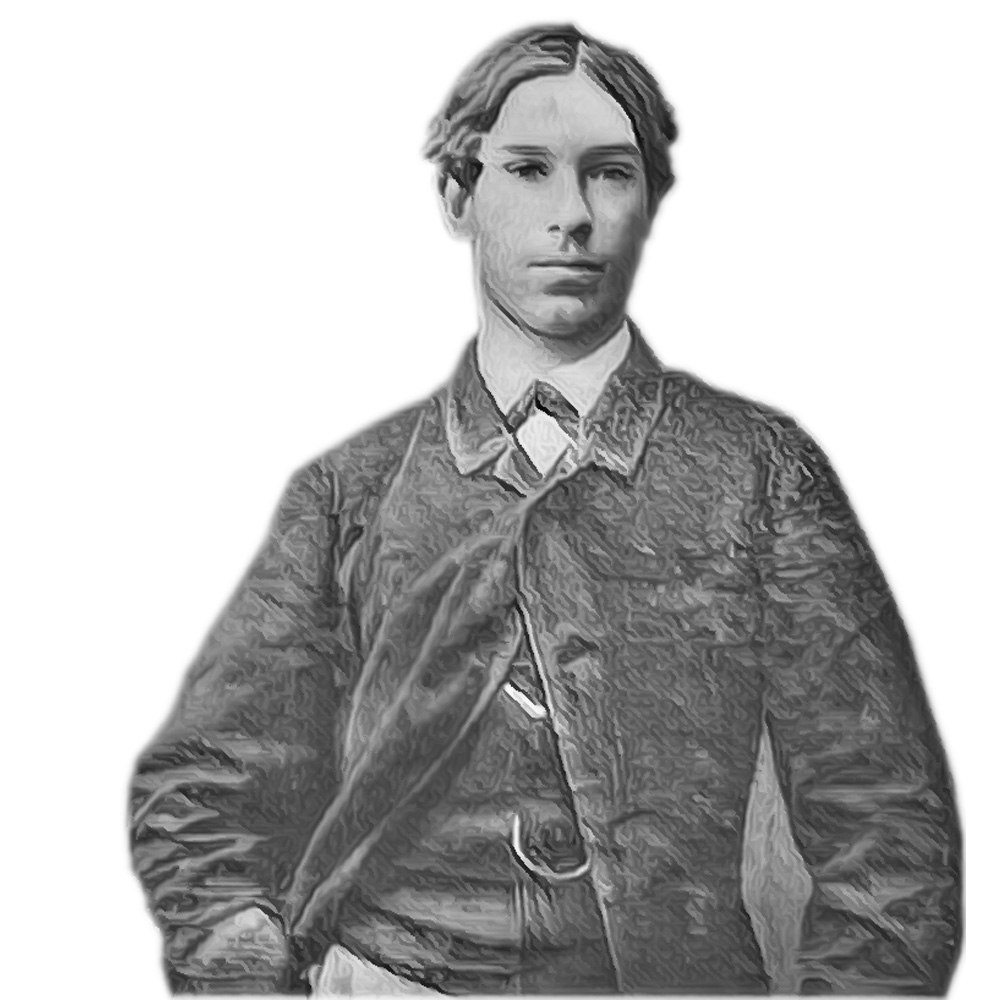
Walter Seymour, one of the five sons of Richard Seymour and Frances Smith, was born on the 9th December, 1838, at Kinwarton, in Warwickshire, where his father, a Canon of Worcester, was Rector.
Rev. Seymour had come to Kinwarton as a serious and godly young man of evangelical outlook at the very time when the Catholic influence of the Oxford Movement, also known as the Tractarian movement, was starting to have an effect across the parishes.
Frances Seymour, born in 1804 at Marylebone, had first met Richard in 1832 while she was living at Mapledurham House, near Reading. Richard's diary (a copy of which is preserved at Warwick County Record Office) records his courtship, proposal and marriage and the appointment to his first living at Kinwarton.
Richard and Fanny raised a large family at the Rectory. The 1851 census records three daughters and five sons aged between eleven months and fourteen years, with a curate, a governess and seven other servants in the household. Fanny died on 27 April,1871. Richard retired from the parish in 1877 and died in 1880 being buried with his wife in Kinwarton churchyard.
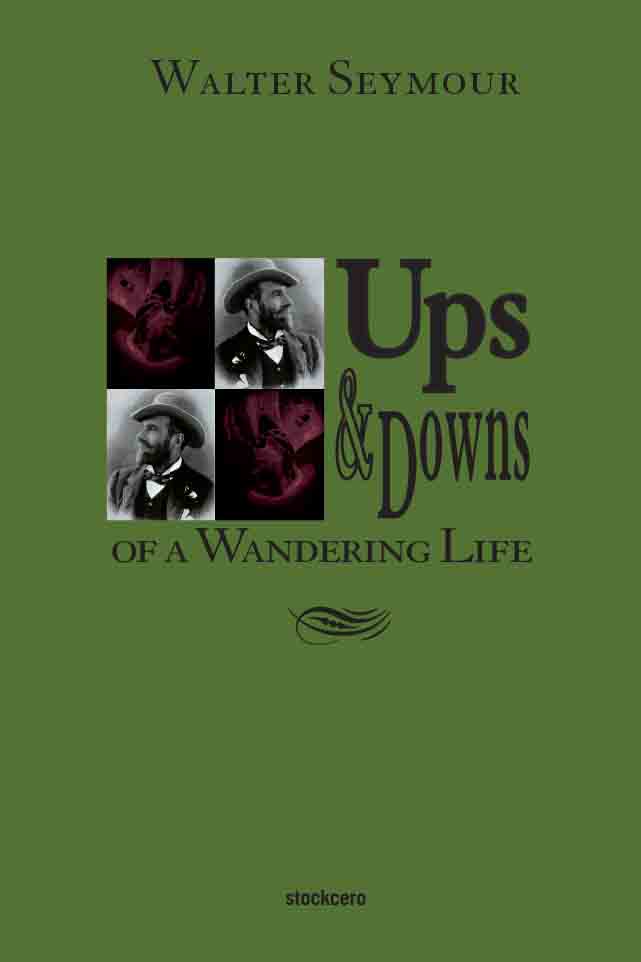
Of the five sons, two travelled to South America. The eldest, Richard Arthur Seymour , wrote "Pioneering in the Pampas" an interesting racconto of his efforts to become a country esquire in the middle of a savage land. Walter Seymour, more mundane, wrote Ups and Downs of a Wandering Life, a most suitable title for the amusing biography of a predictable outcome of strict Victorian upbringing that led him to study at Christ Church, hold a seat in the office of the Surveyor of the Navy –now called the Controller–, in Whitehall, ask to be transferred to the office of the Secretary of the Admiralty and later on to act as junior accountant of the House of Commons, before resigning to lead an adventurous life.
The legacy of the Seymour family transitioned from naval heroism to rural clerical life and, finally, to pioneering adventures in South America.
Sir Michael Seymour, 1st Baronet (1768–1834) was celebrated Royal Navy officer, Sir Michael is best known for his "brilliant exploit" in capturing the French frigate Thétis in 1808. Naval Career: He served through the French Revolutionary and Napoleonic Wars, notably losing his left arm at the "Glorious First of June" in 1794. Following his victory over theThétis and later the Niémen, he was created a baronet in 1809. Final Post: He died in July 1834 while serving as the Commander-in-Chief of the South American Station in Rio de Janeiro.
Reverend Richard Seymour (1806–1880). The fifth son of Sir Michael, Richard broke the family's naval tradition to enter the Church. At Kinwarton: He served as the Rector of Kinwarton and Great Alne in Warwickshire for over 40 years (1834–1876). Life at the Rectory: He was a Canon of Worcester and a prominent local figure; his rectory at Kinwarton reportedly housed nearly 20 people, including his large family, curates, and servants. Marriage: He married Frances Smith, a niece of Sir William Knighton (physician to George IV).
Richard Arthur Seymour (1843–1906). The grandson of Sir Michael and son of the Rector, Richard Arthur was one of several brothers who sought adventure abroad. In 1865–1869: Along with his brother Walter, he traveled to the Argentine Pampas to establish a sheep farming estate called "Monte Molino" (or Estancia Molina) near Fraile Muerto (now Bell Ville), Córdoba. After four years of facing indigenous raids (malones), cholera outbreaks, and the harsh realities of frontier life, he returned to the Kinwarton Rectory in 1868. There, he wrote his memoir: Pioneering in the Pampas; or, the First Four Years of a Settler's Experience in the La Plata Camps, published in 1869. Later Life: He eventually settled in Maidstone, England, where he became a prominent local politician and served as Mayor in 1893.
While Richard Arthur became the chronicler of the family’s Argentine venture, Walter Seymour (his older brother) was his constant companion and a primary figure in the establishment of their estancia.
Life in Argentina (1865–1871)
Walter Seymour
Like Richard, Walter was one of the many children of the Reverend Richard Seymour, Rector of Kinwarton, and Frances Smith.
He followed the path typical of his class, often being described as an "Oxford scholar" who applied his education to the rugged life of a pioneer.
Walter and Richard arrived in Argentina in 1865. Together, they founded the estancia "Monte Molino" (Molina) in the Fraile Muerto region of Córdoba. Walter was central to the farm's operation, managing sheep and cattle while enduring the same frontier hazards as Richard, including cholera and local unrest.
Unlike Richard, who returned to the Kinwarton Rectory after four years to write his book, Walter remained in Argentina for a longer period, continuing to manage their interests before eventually returning to England.
Writing & Travels, a Collaborative Legacy: Although Richard Arthur is credited as the author of the famous memoir Pioneering in the Pampas (1869), Walter's letters and shared experiences provided much of the foundational detail for the narrative.
Later Travels: Walter continued the Seymour tradition of global exploration. He later wrote his own travel memoir, Ups and Downs of a Wandering Life (1910), which recounts his varied adventures across the globe beyond his time in the Pampas, providing a detailed account of his life as a Victorian gentleman who transitioned from civil service in London to global adventures, as before traveling to various continents including South America, Australia, and Africa, he had held positions in the Office of the Surveyor of the Navy, the Secretary of the Admiralty, and as a junior accountant for the House of Commons.