
Luces de Bohemia
By Ramón del Valle-Inclán
 Add Print Copy to Cart
$49.20
Add Online Access
$9.99
Add Print Copy to Cart
$49.20
Add Online Access
$9.99
🎁 24 hours of Free Reading
(No Credit Card Needed)
Professor's Resource
📥 Download Free Teaching KitIncludes critical analysis, class topics & quiz bank.
SCAN TO INTERACT/BUY WITH YOUR SMARTPHONE
—Ramón del Valle-Inclán
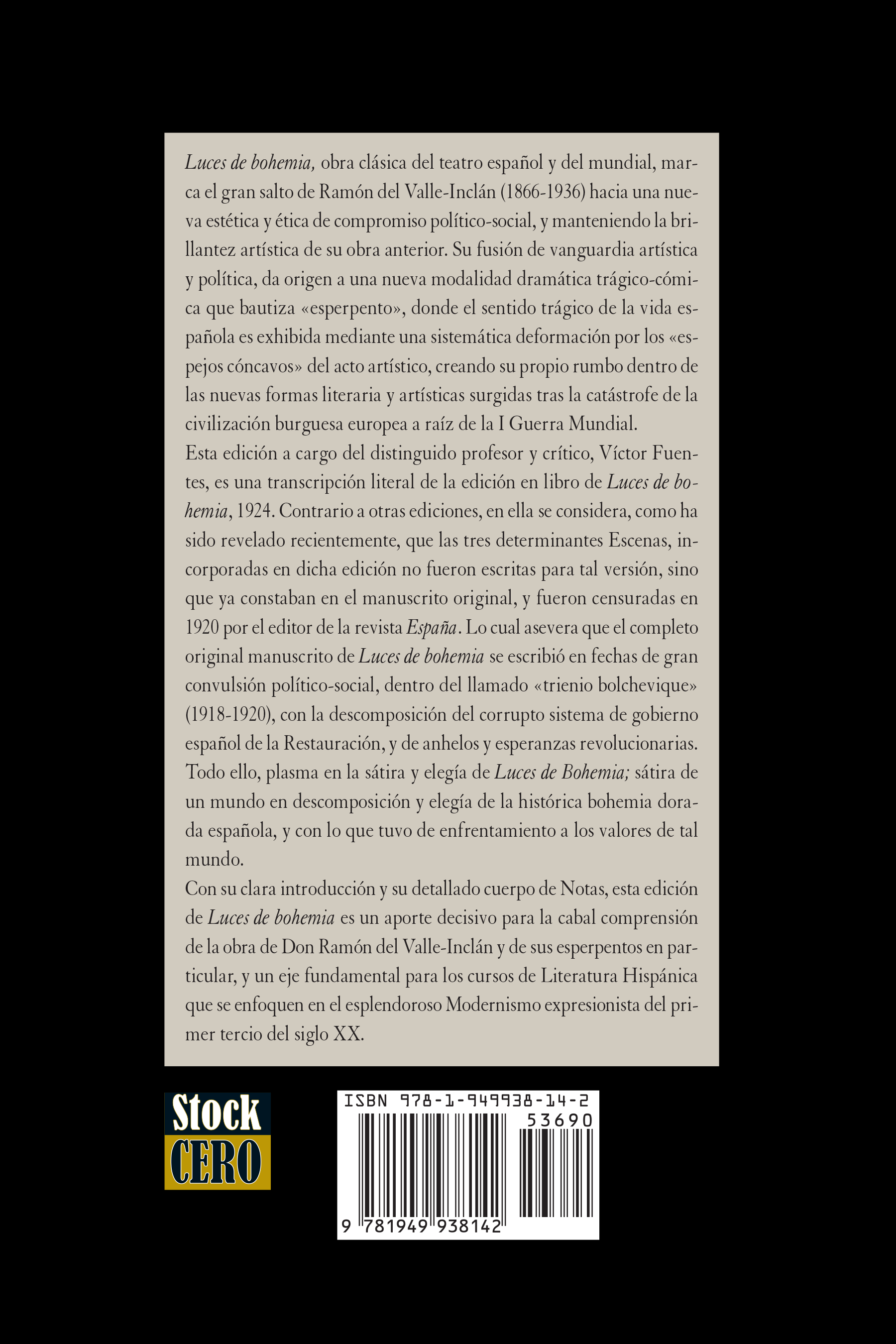
Ramón del Valle-Inclán's Luces de Bohemia (Lights of Bohemia), first serialized in 1920 and published in book form in 1924, is a canonical work of Spanish and global theater. It is the seminal text that introduces the concept of “esperpento”, a literary genre defined by the systematic deformation of reality to reveal the grotesque and tragic absurdity of life. This edition benefits from recent archival discoveries, confirming that previously expurgated scenes (critical for understanding the socio-political context) were part of Valle-Inclán's original manuscript.
This critical edition highlights Valle-Inclán's artistic leap into the political and social realities of his time, embracing popular language and positioning him as a key figure in the “march towards the people.” The work is deeply intertextual, drawing from classic Spanish Golden Age literature, bohemian literary traditions, and mirroring contemporary figures like Alejandro Sawa. It makes masterful use of Madrid's street language, blending it with erudite allusions and poetic touches, especially in the stage directions.
Luces de Bohemia offers an innovative spectacular and specular representation, reflecting the aesthetic and social rupture brought by WWI and the European avant-garde. It echoes works like Joyce's Ulysses and Eliot's The Waste Land, presenting a “pilgrimage/odyssey” through the streets of Madrid. Its plastic vision and dramatic language align with German Expressionist theater and Goya's “black paintings.” Valle-Inclán's play, through the nocturnal wanderings of Max Estrella and Don Latino, explores themes of descent, chaos, and the quest for spiritual liberation, often through the intoxicating freedom of bohemian life.
The play's enduring relevance is underscored by its powerful political and social satire, particularly its engagement with the Spanish State's crisis between 1917 and 1923, and the burgeoning worker's movement. Scenes depicting police repression and strikes directly reference events of the time, such as the “La Fortuna” factory strike of 1920. Valle-Inclán, transitioning from Carlism to positions close to anarchism and socialism, used his art to champion a popular and political cause, challenging the “dehumanization of art” with a fervent “humanization of the world.”
This edition emphasizes the play's unique dramatic structure, which extends beyond the protagonist's death, focusing on social groups rather than individual heroes. It continues to be a vibrant and frequently performed work globally, praised by directors and critics for its profound insight into human experience and its pioneering dramatic innovations that anticipate the theater of the absurd.
ISBN: 978-1-949938-14-2
Pages: 232 (In Spanish)
Editor: Víctor Fuentes
Price (Print): $49.20
Price (Evaluation): $31.98
Price (Online): $9.99
This title is part of these collections:
The Modernism & Avant-Garde Collection
This edition is part of our comprehensive collection on the renewal of poetic language in early 20th-century Spanish literature.
Retail Price: $165.86
Bundle Price: $124.39 (Save $41.65!)
VIEW MODERNISM & AVANT-GARDE BUNDLEModernismo Peninsular: Voces del Fin de Siglo Collection
This title is part of our collection on Aesthetic Renewal in Restoration Spain (5-book bundle).
Retail Price: $174.70
Bundle Price: $131.03 (Save $43.68!)
VIEW FIN DE SIÈCLE BUNDLE

|
The Stockcero Guarantee
SpanishBookPress Editions. |