Author
Biography
Bartolomé Mitre
1821–1906, Argentine statesman, general, and author, president of the
republic (1862–68). An opponent of Juan Manuel de Rosas,
he was forced into exile and had a colorful career as a soldier and journalist
in Uruguay, Bolivia, Peru, and Chile. He returned to aid Urquiza
in defeating Rosas (1852). A leader of the revolt of Buenos Aires against Urquiza’s
federal system, Mitre held important posts in the provincial government after
Buenos Aires seceded from the confederation. He was defeated by Urquiza in the
civil war of 1859, and Buenos Aires reentered the confederation. As governor
after 1860, he again assumed leadership when fresh difficulties led to open
war in 1861. At Pavón he won a victory for Buenos Aires; he then assumed
national authority. In Oct., 1862, Mitre was elected president, and national
political unity was finally achieved; a period of internal progress and reform
began. He served for a time as commander of the allied forces of Argentina,
Brazil, and Uruguay in the war against Paraguay. His political views led to
attacks by Alberdi. In 1868, Mitre was succeeded as president
by Sarmiento, and although still a force in politics, he devoted
himself chiefly to literary work. He founded La Nación
(Buenos Aires), which became one of South America’s leading newspapers.
Mitre was known in his youth as a poet and in later years as a historian. His
important historical works are Historia de Belgrano
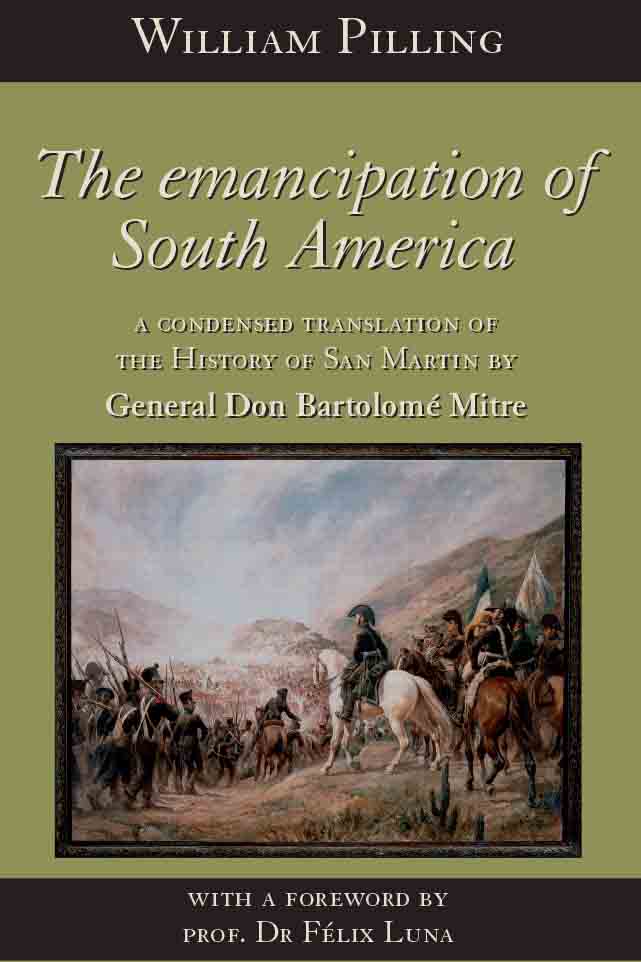
(1858–59, 4th ed. 1887) and this Historia de San Martín
y de la emancipación sudamericana (1877–88), translated
and published in London at his request by William Pilling as
The Emancipation of South America, (1893).