Curated Collection
PROMOTIONAL THEMATIC COURSE BUNDLE for seamless syllabus integration and significant savings
TEACHING KIT
Should the reader of this book expect a literary masterpiece, he is bound for disappointment.
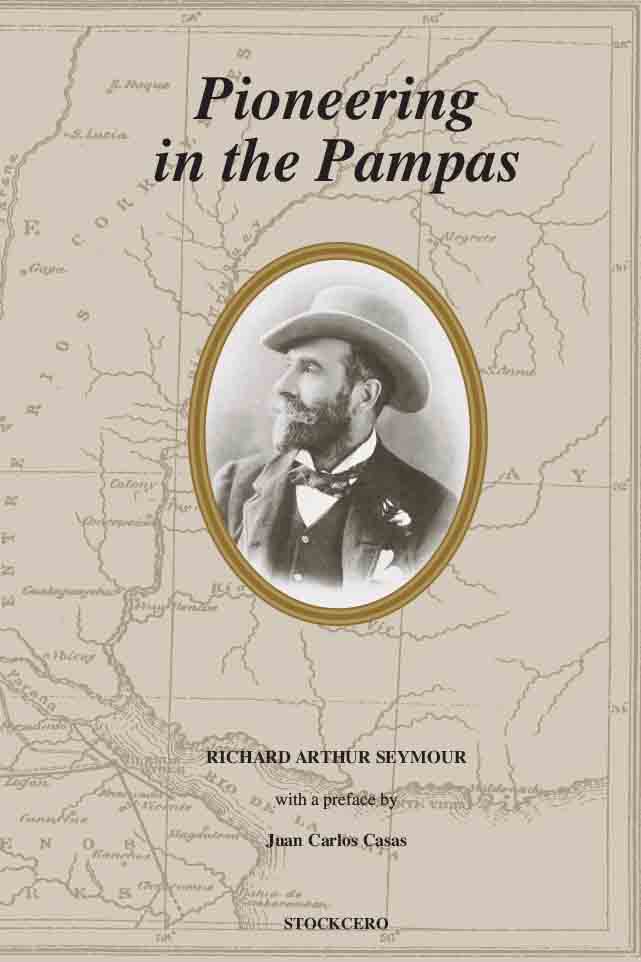
Richard Seymour was not a master writer. However, his love for detail and outstanding memory captivates with the educated and fluent prose of an «average» nineteenth century Oxford scholar. Vivid descriptions about the terrible Ranqueles Indians faces, the Gauchos outfits, and the differences between Indian and Gaucho horse taming methods make reading Pioneering in the Pampas a journey into the experience of everyday life at the Pampas Indian frontier during the mid eighteen hundreds. Minutiae such as hand brick-making, how many bricks per day an experienced worker could make, and how much would he do before becoming exhausted «all basic matters assuming that, even in the midst of nowhere, prime among your goals stands living like an English esquire« dot the book. Were the gauchos honest workers or did they try to work as little as possible? How were the English-type horse races held in Rosario organized? All questions that haunted the earnest Victorian gentleman are subject to Mr. Richard Seymour's sharp observations. Among the both practical and curious details stand: - The outrageously high labour wages «compared to those at home« cowhands, brick makers, horse breakers, and others. - The weak commitment to religion of the Gauchos, who «delegated» church attendance to women leaving to them the chores of advocating on their behalf at doomsday. - The exaggerated size up to which vegetables grew, to much-surprise of the Englishmen. - How commonplace it was for newcomers travelling in the Pampas to lose track of time, ending up sleeping in the open, as Hume and a friend experienced the harsh way. - The high-rank inhabitants of a low-rank town, such as Fraile Muerto in those days, including the town's cheap hotel and its colourful clientele. - Differences between Creole and English sheep. - The immediate requirement to dig trenches surrounding the houses and corrals as a defence measure against Indian attacks. - The ill-fated government decision to transfer the soldiers from the line of forts, thus leaving unprotected the white population south of the Córdoba Province. - The appearance of cholera in the region and its high death toll. - How law and order were enforced by the «comandante» through summary trials and executions, and why English pioneers always carried their revolvers. Through Richard Seymour's narrative, the geography of the Pampas and the times before railroads and immigration waves acquire amazingly realistic characteristics. Soon enough the conquest of the desert by President Roca in 1880 would change the character of the place, though strangely Richard Seymour seems unwilling to stand witness to it. Without explicitly mentioning the detail in his book, he departed for England in1869 where «in the Rectory of Kinwarton, Warwickshire« he devotedly relived his experiences by writing this book. The vivid memories and the ever present strict Victorianism of his stance regarding relations with the opposite sex, strikingly never mentioned in spite of his youth and circumstance «a man in his early twenties dwelling with bachelor friends in a savage land where they must have undoubtedly encountered Creoles, Indians and some scarce British female subjects« altogether with the implicitly painful and unexplained abandonment of it all, sparked my mind up to the point of writing «Fraile Muerto», the novel, bridging the notorious sex absence gap with an imaginary underlying plot. All said, I must add that bringing back to print Richard Seymour's book is my most sincere homage to the man who preceded me in the love for the strange solitudes of the Argentine Pampa's soul.
Juan Carlos Casas
Buenos Aires « December 2002


Customer reviews functionality will be available soon.